




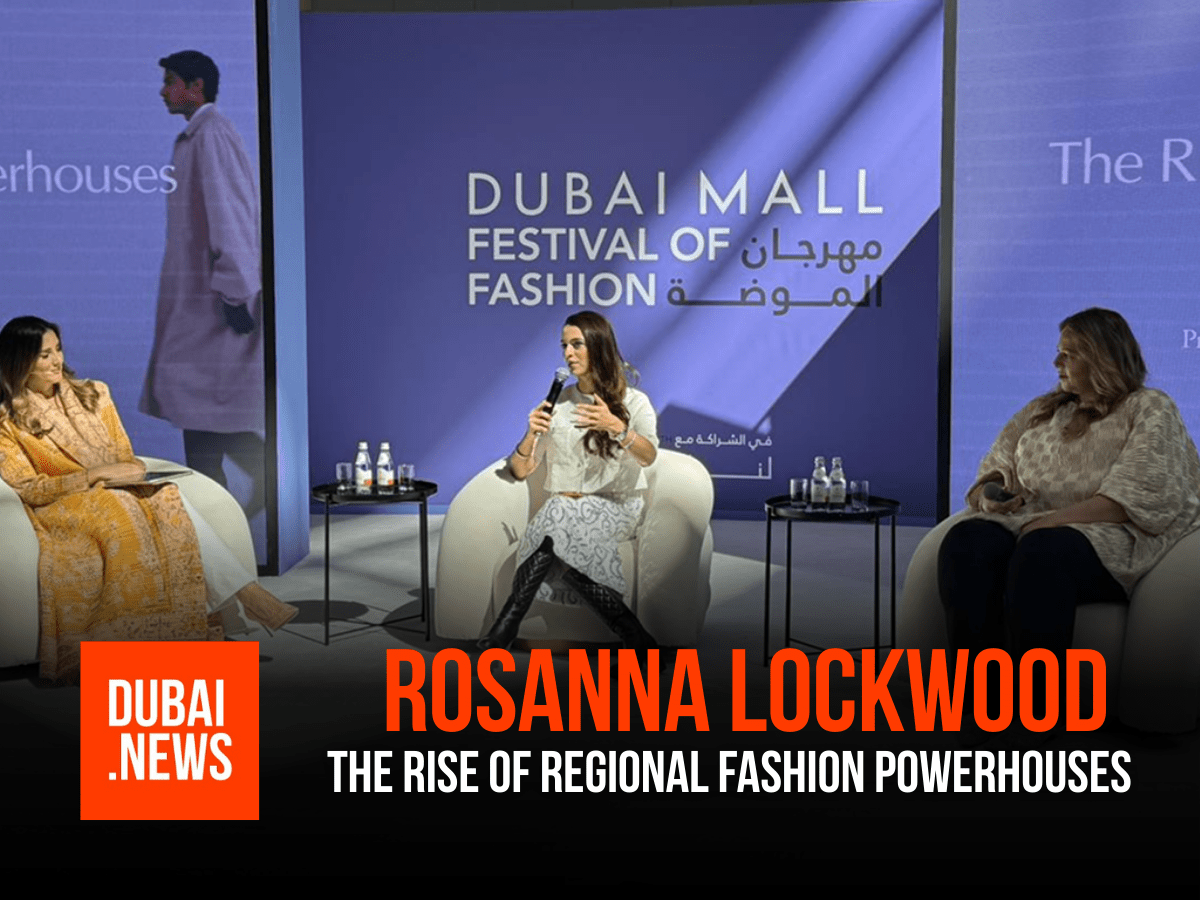
The narrative of the Middle East as merely a consumer of luxury is officially dead. That was the resounding message from the second session of the Dubai Mall Festival of Fashion, where the discussion shifted from importing trends to exporting culture.
In a session titled “The Rise of Regional Fashion Powerhouses,” moderated by Rosanna Lockwood, designers and entrepreneurs stripped away the glamour to reveal the gritty reality of building a global brand from the desert. The panel featured Dima Ayad, the celebrated Lebanese designer and founder of her eponymous label, and Prarthana Nandwani, founder of Evogue Digital.
The “Dubai Gaze” Phenomenon
The session’s defining moment came when Dima Ayad coined a new term for the industry: “The Dubai Gaze.”
Reflecting on how the region was long judged by Western standards, Ayad issued a patriotic manifesto for local creatives. “For the longest time, we’ve been tarnished with this ‘Western gaze,'” Ayad said. “I’m so proud to say we have a ‘Dubai gaze.’ I want everyone around the world to know it’s a Dubai-based brand.”
She noted a psychological shift where expats and locals alike now feel a distinct “national pride” in wearing “Made in Dubai” labels, rather than seeking validation from European heritage brands.
The “Dubai Chocolate” Effect
Prarthana Nandwani illustrated this global shift with a viral analogy that drew laughter and nods from the audience: The Dubai Chocolate.
“I was in an airport recently and saw major global chocolatiers like Lindt and Godiva selling ‘Dubai Chocolate,'” Nandwani recounted. “People are specifically requesting it from across the planet. The brand of Dubai has become a legitimate force of nature.”
The panel agreed that fashion is now following the same trajectory—becoming a cultural export that the world actively craves.
The Hustle: Day Jobs and “Night Jobs”
Moving beyond the hype, the session offered a masterclass in financial survival. Ayad delivered a refreshingly honest admission about the early days of her business, revealing she kept her corporate career to fund her creative dream.
“I always had a day job,” Ayad confessed. “The day job funded the night job until they both became independent businesses.”
She advised aspiring designers against taking seed funding too early, describing it as a “leap of faith” one should only take when absolutely ready. Instead, she advocated for a self-sustaining model: “The money we make through the clothes, we put back in the business.”
Operations Over Ego
Both panelists warned against the trap of “artistic excitement” overriding business logic. Ayad, whose brand is known for its inclusivity (offering sizes from XS to 4XL), revealed she operates on a 24-hour production model to minimize waste.
“It’s indicative of the fact that you can’t forecast,” Ayad explained, describing the industry as a gamble. “The item you love the least becomes the bestseller.”
Nandwani backed this up with a call for resilience, referencing The Seven Habits of Highly Effective People. She urged entrepreneurs to focus on “principles before tactics” and to prepare for the inevitable “first pancake”—the initial failure that precedes success. “You have to have the production, the marketing, the execution… the whole business cycle in place before getting excited,” she warned.