



What To Know
- ” She revealed she uses ChatGPT not as a creator, but as a “sparring partner” to challenge her own thinking, suggesting AI is better suited as a coach than a commander.
- ” He argued that the future of the Dubai Mall isn’t robot staff, but human staff who know your size, taste, and history the moment you walk in—courtesy of AI.
- Andreas Hasselloef, CEO of Ombori, shifted the conversation to the physical store, painting a picture of a future where staff are “super-powered” by data rather than replaced by it.
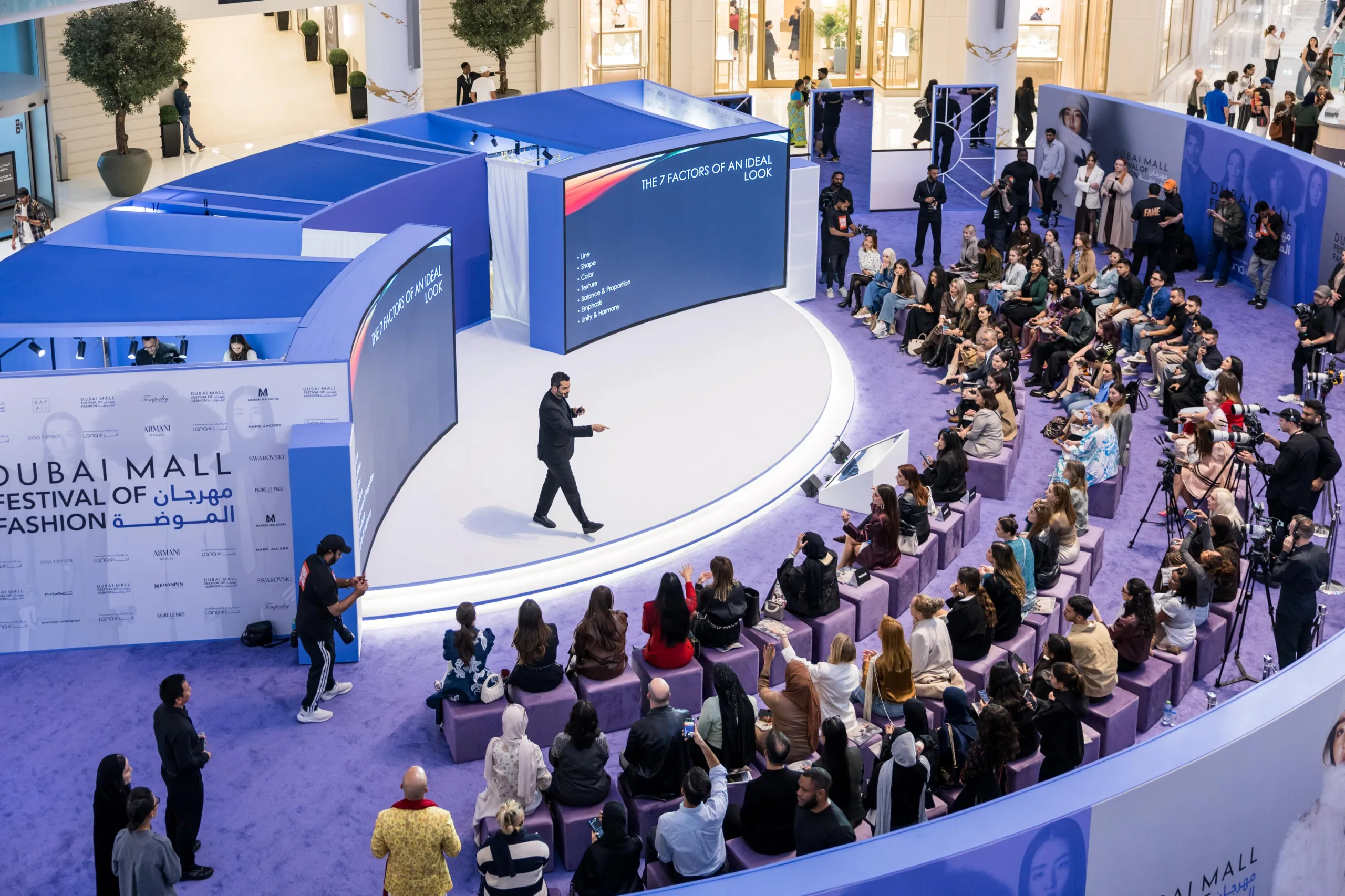
Who here thinks AI played a role in what they are wearing today? asked moderator Louise Nichol to a packed audience at the Grand Atrium this morning. When the majority kept their hands down, implying their style was purely their own choice, the tone for the day’s opening session was set: a fascinating tug-of-war between the romanticism of fashion and the cold hard reality of data.
The session, titled “AI & The Future of Fashion,” was expected to be a technical roadmap. Instead, it evolved into a high-stakes philosophical debate on the soul of the industry, featuring Venture Capitalist Liya Dashkina, Legal and Web3 expert Dr. Karin Lorez, Tech CEO Andreas Hasselloef, and Entrepreneur Dyuti Parruck.
The Invisible Hand of Retail
While the audience resisted the idea of being influenced by robots, Liya Dashkina, co-founder of Fashion Tech Middle East, quickly dismantled the illusion of free will in modern consumption. She argued that AI is already “quietly affecting all parts of the value chain,” often invisible to the consumer.
“It is inventory and merchandising to prevent overproduction. It is trend forecasting feeding into design,” Dashkina explained. She noted that while the industry fears “AI slop”—a flood of low-quality, generated content—the pendulum is settling in the middle. Her standout philosophy for the session became the day’s buzzing slogan: “Human first, AI forward.”
The Clash: Authenticity vs. Efficiency
The most heated exchange of the morning centered on “The Trust Deficit.” Dyuti Parruck represented the traditionalist consumer. Pointing to his pink socks as a choice “zero robots” made, he drew a hard line on creativity.
“I am completely against the idea of having this for all,” Parruck argued. “If I know an image is AI, I will just scroll up… The human touch is missing.” He issued a stark warning to brands: while businesses will go “insolvent” without AI efficiency, they risk losing their soul if they automate the art.
Dr. Karin Lorez countered with a provocative legal and psychological perspective, questioning the audience’s sudden demand for “truth” in advertising.
“Do we really need to know if it’s AI?” Lorez asked, challenging the room. “We accepted airbrushed photos of supermodels for decades. The industry has always been smoke and mirrors.” She revealed she uses ChatGPT not as a creator, but as a “sparring partner” to challenge her own thinking, suggesting AI is better suited as a coach than a commander.
The Future Store: “Tony Stark” Style Assistants
Andreas Hasselloef, CEO of Ombori, shifted the conversation to the physical store, painting a picture of a future where staff are “super-powered” by data rather than replaced by it.
“I don’t want to live in a world where I only interact with agents,” Hasselloef admitted. “Humans love interacting with humans.” He argued that the future of the Dubai Mall isn’t robot staff, but human staff who know your size, taste, and history the moment you walk in—courtesy of AI.
Hasselloef also provided the most memorable anecdote of the session, revealing he has built a private, home-server AI named “Ada” that manages his health, calendar, and business data securely. “I walk around my house pretending I’m Tony Stark,” he joked, illustrating the extreme potential of personalized AI assistants.
The “Human Premium”
The session concluded with a consensus that as AI becomes ubiquitous, “rawness” will become the new luxury. Moderator Louise Nichol noted a shift in beauty standards where “perfect, glossy images” are now assumed to be fake, while “a dirty makeup palette used down to the pan” signals authenticity.
As the panelists left the stage, the message to the assembled fashion insiders was clear: AI is the engine, but humanity is the steering wheel. As Dashkina summarized: “You use AI as the data set behind you… but you cannot take away the human ability to build emotional connections.”
