





Artificial intelligence is not merely transforming industries or reshaping job markets — it is fundamentally redefining what it means to be human.
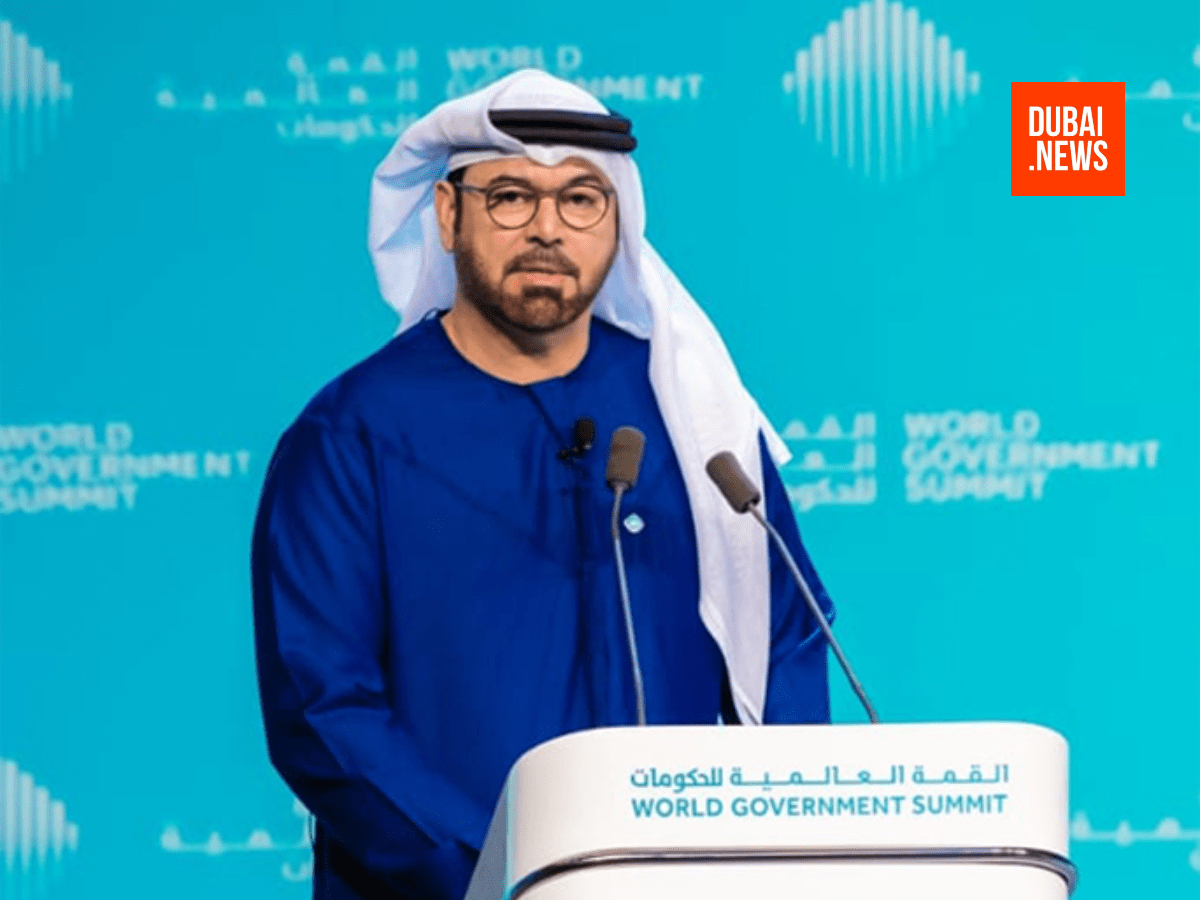
That was the central message delivered by Mohammad Al Gergawi, UAE Minister of Cabinet Affairs and Chairman of the World Governments Summit (WGS), during his opening remarks at the World Governments Summit 2026 in Dubai on Tuesday, February 3.
Al Gergawi said the world is not witnessing just another technological revolution, but a profound shift in human capability, identity and experience. Unlike previous eras of innovation, the current moment marks a turning point in humanity itself.
To illustrate the speed and scale of change, he offered a striking analogy. If the entire lifespan of the universe were compressed into a single year, humans would appear only on the final day, and all of recorded human history would occupy the last ten seconds. Yet in that short span, humanity has transformed civilisation — and today, he said, the world is living through a similarly pivotal moment.
AI as a thinking partner
The first major force reshaping humanity, according to Al Gergawi, is artificial intelligence. Unlike earlier tools that simply extended human effort, AI now thinks, learns and analyses alongside people.
In healthcare, AI systems already assist doctors by identifying patterns that are difficult for the human eye to detect. Al Gergawi noted that diagnosis could soon become fully AI-powered, fundamentally changing how people interact with healthcare on a daily basis.
This shift, he said, is not about replacing humans, but about redefining human potential and decision-making in an AI-augmented world.
Longer, healthier lives
The second force transforming society is advanced medicine. With the cost of genetic sequencing falling rapidly, personalised healthcare is becoming increasingly viable. Diseases may soon be detected years before symptoms appear — and in some cases, even before birth.
Over the past century, global life expectancy has doubled. Al Gergawi said it could double again within the next 100 years, raising urgent questions about how societies organise work, retirement, healthcare systems and public services in a world where people live significantly longer lives.
Unlocking the human brain
The third transformative force is neuroscience. Al Gergawi suggested that the most important breakthroughs of the future may come not from space exploration, but from understanding the human mind.
Early trials of brain–computer interfaces already allow individuals to control devices using their thoughts. These developments signal a future in which learning, memory and cognition could expand far beyond current limits.
Such advances, he said, could fundamentally alter how humans acquire knowledge and interact with technology.
Digital identities and virtual lives
The fourth force reshaping humanity is the rise of digital environments. With billions of people online, individuals now exist across multiple platforms, maintaining parallel digital identities that compete for attention, time and emotional investment.
This fragmentation of identity, Al Gergawi warned, presents new challenges for individuals and societies alike — from mental wellbeing to social cohesion.
A warning for governments
Al Gergawi concluded with a clear warning: the greatest risk is not governments falling behind technology, but falling behind humanity itself.
As human capabilities evolve at unprecedented speed, he said, policymakers must focus not only on regulating innovation, but on understanding and supporting the changing nature of human life in an age defined by artificial intelligence, advanced medicine, brain science and digital worlds.
The future, he stressed, is not just about smarter machines — it is about redefining what it means to be human.
Cover Image: worldgovernmentssummit/Website