




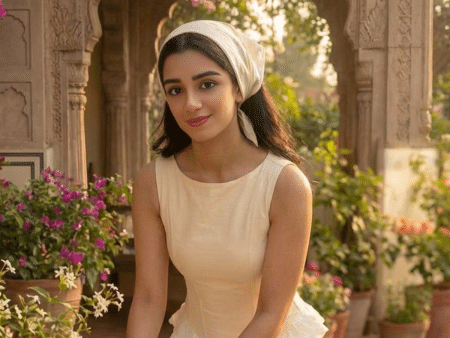
The next model you stop scrolling for might not be real.
Across the fashion, beauty, and luxury industries, brands are quietly shifting toward a new kind of face — one that doesn’t exist outside a screen. These are not edited photos or enhanced visuals. They are fully AI-generated humans, created from scratch using advanced artificial intelligence tools.
And the shift is happening faster than most people realize.
From Photoshoots to Prompts
Traditionally, campaigns required full production setups — models, photographers, stylists, locations, travel, and weeks of planning.
Now, some brands are replacing that entire process with a single prompt.
AI can generate hyper-realistic models in minutes. No scheduling conflicts. No travel costs. No production delays. Just instant results that look polished enough to compete with real-world shoots.
For brands, the appeal is obvious.
Some campaigns using AI-generated models are reportedly delivering 10 to 20 times higher return on investment compared to traditional shoots.
The Quiet Shift No One Talks About
What makes this trend more complex is transparency.
A few brands openly disclose when AI is used. But many do not.
That means consumers are often engaging with campaigns without knowing whether the face they’re seeing belongs to a real person or a digital creation.
And that uncertainty is starting to raise questions.
Industry Divide: Ethics vs Efficiency
Not every brand is embracing this shift without hesitation.
For example, Aerie has publicly stated it will not use AI-generated bodies, emphasizing its long-standing commitment to body positivity and real representation.
Others, however, are moving in the opposite direction — investing heavily in AI-driven visuals to reduce costs and increase speed.
The industry is now split between two paths:
- Authentic human representation
- Scalable AI-generated perfection
What Happens to Human Creators?
This shift doesn’t just affect models.
The traditional ecosystem includes photographers, stylists, makeup artists, creative directors, and production teams — a global industry supporting hundreds of thousands of professionals.
AI challenges that structure.
When a full campaign can be generated digitally, many of those roles become optional.
For models and influencers who spent years building their image and audience, the competition is no longer just other people — it’s technology that can replicate a similar look instantly, at a fraction of the cost.
Can You Tell What’s Real Anymore?
That is the question now driving conversation across the industry.
AI-generated faces are becoming increasingly difficult to distinguish from real humans. Subtle imperfections, lighting, textures — all the details that once revealed digital manipulation are now being recreated with precision.
For audiences, the line between real and artificial is starting to blur.
The Bigger Picture
This is not just a trend. It’s a shift in how visual content is created, consumed, and trusted.
Brands gain efficiency. Costs drop. Output increases.
But at the same time, questions around authenticity, transparency, and human value are becoming harder to ignore.
The next time you see a perfect face in a campaign, there’s a new question to ask:
Was that person ever real?


 Afrikaans
 Shqip
Shqip አማርኛ
አማርኛ العربية
 Հայերեն
 Azerbaycan
 Euskara
 Беларуская
 বাংলা
বাংলা Bosanski
 Български
 Catalan
 Cebuano
 Chichewa
 中文(简体)
 中文(繁體)
 Corsu
Corsu Hrvatski
 Čeština
 Dansk
Dansk Nederlands
 English
 Esperanto
 Eesti
Eesti Filipino
 Suomi
Suomi Français
 Frysk
Frysk Galego
 ქართული
 Deutsch
 Ελληνικά
 ગુજરાતી
 Kreyol
 Hausa
Hausa Hawaiʻi
 עברית
עברית हिन्दी
 Hmong
Hmong Magyar
 Íslenska
 Igbo
Igbo Indonesia
 Gaeilge
 Italiano
 日本語
日本語 Basa Jawa
 ಕನ್ನಡ
ಕನ್ನಡ Қазақ
Қазақ ខ្មែរ
ខ្មែរ 한국어
한국어 Kurdî
Kurdî Кыргыз
 ລາວ
ລາວ Latin
Latin Latviešu
 Lietuvių
 Lëtzebuergesch
 Македонски
 Malagasy
 Melayu
 മലയാളം
 Malti
Malti Māori
Māori मराठी
मराठी Монгол
 မြန်မာ
 नेपाली
 Norsk
Norsk پښتو
پښتو فارسی
فارسی Polski
 Português
 ਪੰਜਾਬੀ
 Română
 Русский
 Samoa
Samoa Gàidhlig
 Српски
 Sesotho
 Shona
Shona سنڌي
سنڌي සිංහල
සිංහල Slovenčina
 Slovenščina
 Soomaali
 Español
 Sunda
Sunda Kiswahili
 Svenska
 Тоҷикӣ
 தமிழ்
தமிழ் తెలుగు
 ไทย
ไทย Türkçe
 Українська
 اردو
اردو Oʻzbek
 Tiếng Việt
 Cymraeg
 isiXhosa
 יידיש
יידיש Yorùbá
 isiZulu