



What To Know
- Designers are placing these icons on the side of the hand or along the wrist for a clean finish.
- There is also a long-standing cultural joke that darker henna stains signal stronger affection from a husband or mother-in-law.
- A Quick Cultural Fact and a Safety Reminder.
Ramadan 2026 has officially rewritten the henna playbook in Dubai.
Iftar invites are locked in. Kaftans are out. Jewelry is layered. And now, palms are getting their own aesthetic upgrade.
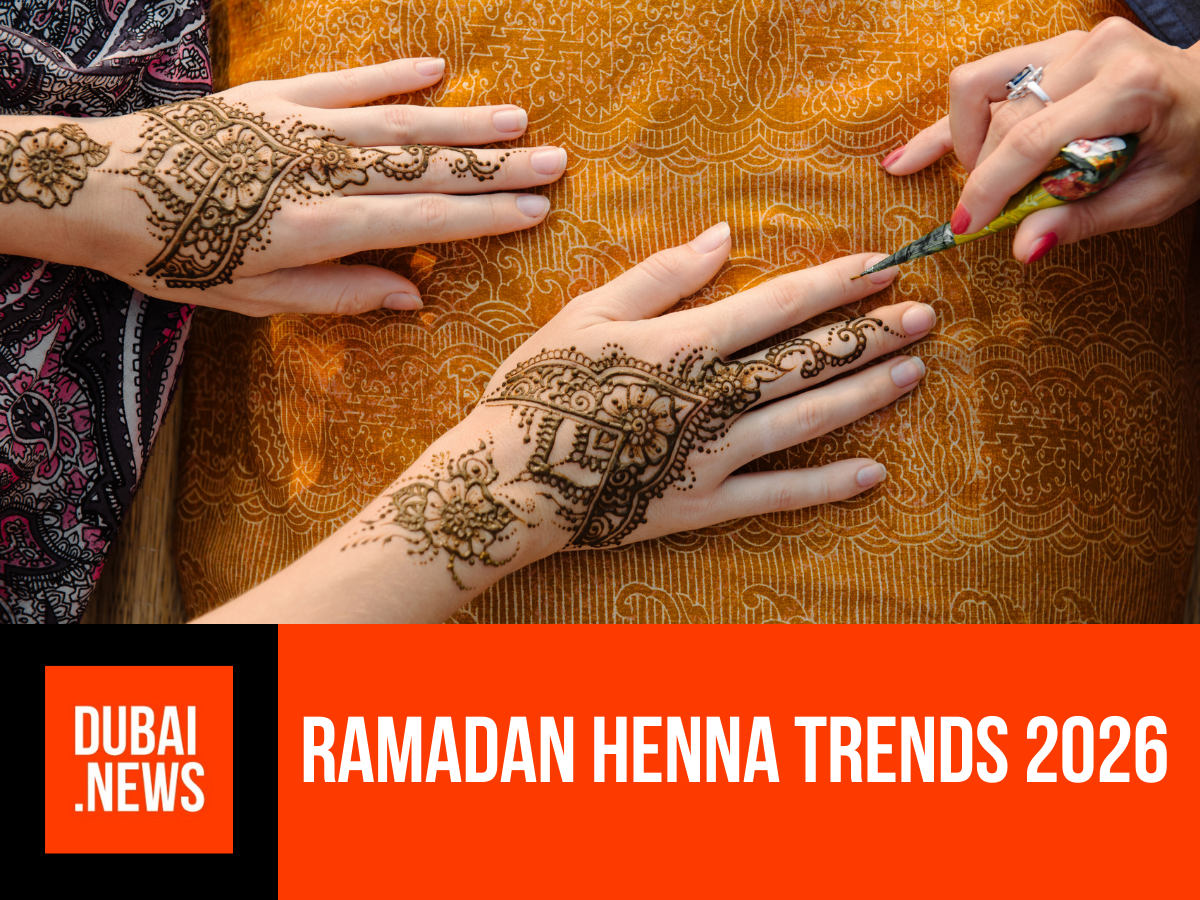
This season, Ramadan henna trends 2026 are sharper, lighter, and curated for camera moments. From minimalist finger vines to crescent placements with intention, the focus has shifted. The heavy full-hand patterns are fading from feeds. Clean detail and smart placement are taking their place.
If you are planning your Iftar look, this is the update you needed.
The Ramadan Glow Up Is Real
Ramadan in Dubai always brings a wardrobe reset. Kaftans come out. Jewelry gets layered. Nails are booked. And this year, henna is leading the beauty conversation.
Henna has long been part of celebrations during Ramadan and Eid across the Middle East, South Asia, and North Africa. In 2026, it has stepped into a new aesthetic era. The designs circulating right now are lighter, more curated, and intentional. Palms are treated like canvases, and placement matters. It is cultural, personal, and photo ready. And the aesthetic shift is clear.
The Clean Girl Palm
Minimal henna is having a major moment.
Beauty editors highlight dainty motifs that sit on fingers or trail lightly along the wrist. Think fine florals, thin vines, and negative space that lets skin breathe. The coverage is minimal, and the lines are precise.
This style speaks to the girl who wants polish without clutter. It pairs well with neutral manicures, gold rings, and tailored abayas. Subtle placement keeps it modern while honoring tradition.
Desert Core and Celestial Codes
Regional motifs are back in focus.
Palm trees, crescent moons, and star patterns are appearing in fresh layouts. These symbols hold cultural significance during Ramadan, especially the crescent moon, which marks the Islamic lunar calendar and the beginning of the holy month.
Designers are placing these icons on the side of the hand or along the wrist for a clean finish. The result feels current and regionally aware without being heavy.
Coquette and Cool Girl Details
Henna artists are also experimenting with playful accents.
Bows, tiny hearts, and delicate sparkles are trending in feminine design spaces. This “coquette” influence is visible on Pinterest boards and beauty feeds, and it has found its way into Ramadan styling.
On the other end of the spectrum, free hand abstract patterns are circulating among younger artists.
Hard lines meet curved forms. Dots are placed intentionally. Placement is unconventional. The aesthetic leans editorial and bold.
Both styles are gaining traction this season.
The Brands Getting Attention
Several henna-focused brands are shaping the conversation.
Dr. Azra offers ready-made cones and stencil designs, including bows and Arabic calligraphy. Her work has gained attention for making detailed application more accessible.
Naghshzeen, an Iranian art studio, is known for contemporary interpretations of traditional Persian motifs.
Orea Bazaar draws inspiration from tatreez embroidery, incorporating Palestinian textile heritage into fine-line henna patterns.
Mektoub Henna provides educational e-books covering henna history and design inspiration for those who prefer a DIY approach.
A Quick Cultural Fact and a Safety Reminder
Henna dates back thousands of years, with documented use in Ancient Egypt and Babylon. It has long been part of wedding ceremonies, festivals, and religious celebrations.
There is also a long-standing cultural joke that darker henna stains signal stronger affection from a husband or mother-in-law. It remains part of wedding folklore in several communities.
One important safety note. Natural henna stains range from orange to deep reddish brown. Black henna often contains para-phenylenediamine, known as PPD, which can cause severe allergic reactions including blistering and scarring. Dermatologists and health authorities caution against its use.
If irritation occurs, it should be removed immediately.
Ramadan henna trends 2026 are precise, curated, and culturally aware. Whether you choose minimal florals, celestial icons, or abstract line work, timing matters. Natural henna takes 24 to 72 hours to darken fully.
Plan your application, plan your outfit, and plan your photo moment.
Ramadan Kareem.
