




Dubai is set to adopt the “sponge city” concept as part of its long-term urban development strategy, following a new partnership with China’s Urban Planning and Design Institute of Shenzhen (UPDIS), announced during the World Governments Summit (WGS) 2026.
The sponge city model focuses on designing urban infrastructure that absorbs, filters and reuses rainwater, rather than allowing it to overwhelm drainage systems and cause flooding. The approach treats the city like a sponge, using green roofs, permeable pavements, landscaped spaces and underground storage to manage water sustainably and release it gradually when needed.
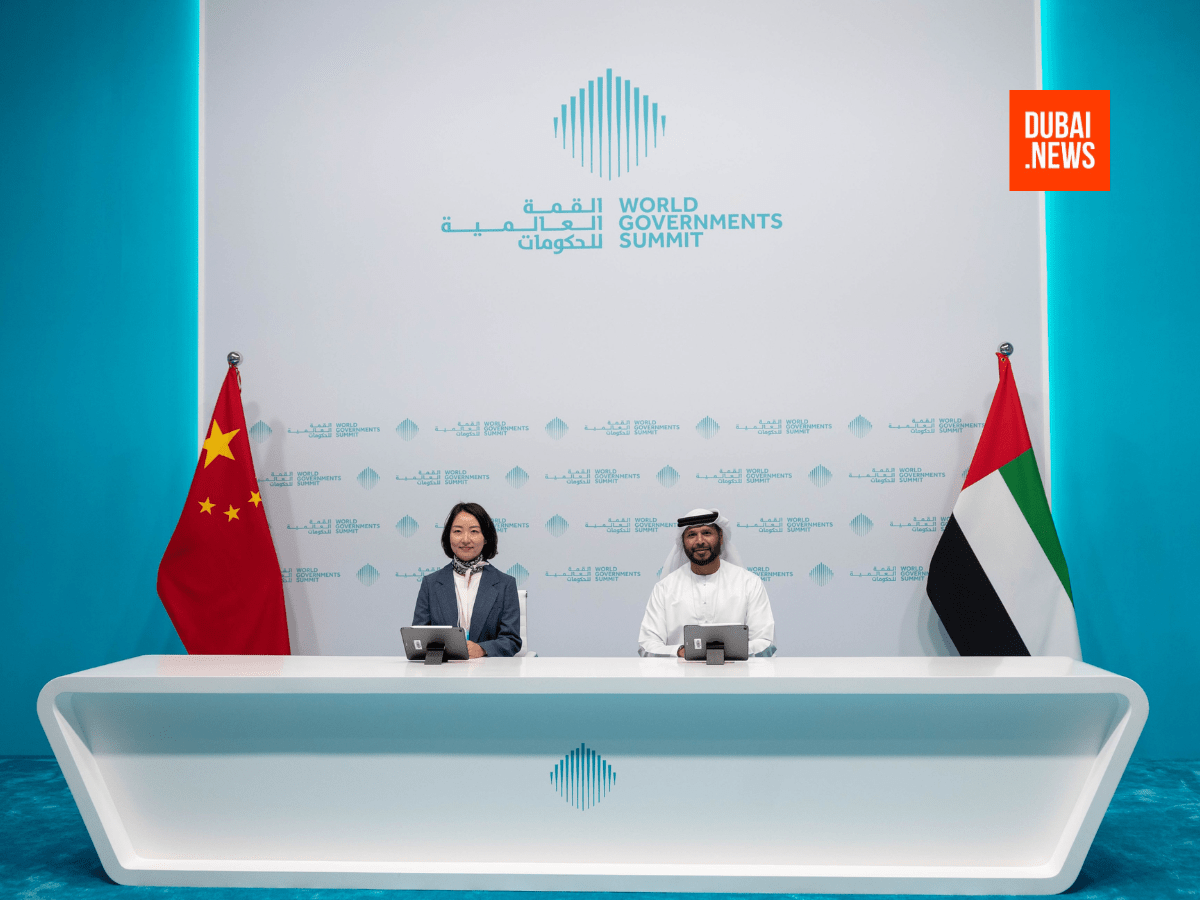
#DubaiMunicipality signed a Memorandum of Cooperation with the Urban Planning and Design Institute of Shenzhen (UPDIS), one of China’s leading government-affiliated centres of expertise in comprehensive urban planning, on the sidelines of the World Governments Summit 2026. pic.twitter.com/IvknNpP0xB
— بلدية دبي | Dubai Municipality (@DMunicipality) February 3, 2026
Strategic partnership signed at WGS 2026
Dubai Municipality signed a Memorandum of Understanding (MoU) with UPDIS on the sidelines of the summit, marking a significant step toward introducing future-ready urban planning practices in the emirate.
The agreement establishes a structured framework for cooperation in areas including urban planning and design, smart and sustainable city development, low-carbon urban growth, and advanced infrastructure systems. Through this collaboration, both parties will exchange expertise and align planning methodologies to support more resilient, efficient and people-centred cities.
The MoU builds on a high-level Dubai delegation visit to Shenzhen in February 2025, where officials studied the Chinese city’s experience in sponge city development and smart urban solutions. The visit highlighted strong alignment between Dubai and Shenzhen’s development paths and long-term planning priorities.
Focus on smart, low-carbon urbanism
Under the agreement, Dubai Municipality and UPDIS will jointly develop and apply advanced planning and design approaches that integrate international best practices with local frameworks. These include:
-
Sponge city concepts
-
Low-carbon city planning
-
Transit-oriented development
-
Agile and compact urbanism
-
Smart city models
The partnership also covers the use of emerging technologies across urban planning, construction, operations and city management, supporting the transition toward intelligent, data-driven urban systems.
Advanced infrastructure and digital planning
In the infrastructure domain, the MoU outlines cooperation on next-generation planning and design solutions, including integrated underground services, smart water management systems powered by artificial intelligence and big data, and advanced ICT systems supported by 5G technology.
Both parties will also collaborate on deploying spatial analysis tools, AI-driven planning techniques and data-based urban design principles to enhance sustainability, resilience and liveability across Dubai’s urban landscape.
Platform for future city innovation
The partnership positions Dubai and Shenzhen as joint contributors to new global urban development models, drawing on their shared experience of rapid growth and innovation. Annual joint reviews will be conducted to assess progress, explore new areas of cooperation and ensure alignment with both cities’ strategic priorities.
Leadership perspectives
Marwan Ahmed bin Ghalita, Director General of Dubai Municipality, said the agreement reflects Dubai’s commitment to learning from global urban leaders while contributing its own planning expertise internationally.
“This partnership strengthens our ability to deliver smart, sustainable and people-centred urban environments that respond to future challenges and enhance quality of life,” he said, adding that the World Governments Summit provided the ideal platform to formalise the cooperation.
Yu Lu, President of the Shenzhen Urban Planning and Design Institute, noted that Dubai and Shenzhen share similar development timelines and urban structures, having both experienced rapid growth over a short period.
She said the MoU goes beyond technical cooperation, opening doors for personnel training, academic research, resource sharing and technology exchange, while promoting mutual learning through shared best practices.
Supporting Dubai 2040 vision
The agreement supports Dubai Municipality’s broader mandate under the Dubai 2040 Urban Master Plan, reinforcing the emirate’s position as a global hub for forward-looking urban governance, sustainability and innovative city-making.
Cover Image: @DXBMediaOffice/X